|
Major General Sir Christopher Airy KCVO CBE
Late Grenadier Guards and Scots Guards
by Brigadier Kim Ross OBE
formerly Scots Guards
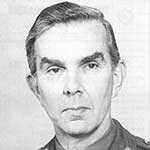
|
Christopher was born on 8th March 1934 in the Queen Elizabeth Military Hospital in Woolwich. His father Tim had initially served in the Royal Air Force in the 1920s, gaining his wings before transferring into the army in the Buffs (Royal East Kent Regiment). Christopher was one of four children, two brothers Michael and James and a sister Elizabeth. In the late 1930s the family were stationed in Gibraltar where Christopher’s father was responsible for the security of the tunnels under the rock.
In 1940 Christopher’s father decided the family should be evacuated back to England. On the journey home Christopher was found on deck, fascinated by ripples on the surface of the sea which kept appearing, until it was explained to him that they were actually torpedoes.
The family were initially sent to Kent and then to Gloucestershire. Eventually they were to buy a beautiful house at Woodchester in the Cotswolds, where the children were to spend their childhood surrounded by Jersey cows and chickens. The house was near a Prisoner of War camp and the prisoners dug out a swimming pool for them in the garden. Christopher loved cycling and quite illegally driving his father’s tractor, both of which were to become lifelong passions.
Christopher was educated at Marlborough. His mother would drive the boys along with their trunks the 48 miles to the college in a pony and trap. At weekends Christopher would cycle to their home in Woodchester and back. Christopher’s parents decided that, on leaving Marlborough, he should learn French and was sent to the Sorbonne in Paris on a course, culminating in him being fluent in French.
In 1952, he joined the Royal Military Academy Sandhurst as an Officer cadet. He remembered street lining in Parliament Square in the pouring rain at the Queen’s Coronation. Two years later he was commissioned into the Grenadier Guards. He was later joined in the regiment by one of his lifelong friends, David Gordon-Lennox. They had known each other since they were 5, having shared the same governess. Christopher was a frequent visitor to the Gordon-Lennox house at Saul on the banks of the River Severn.
His first posting was to the 3rd Battalion who were on public duties stationed in Windsor guarding The Castle. One day whilst on guard, he received a telephone call inviting him to join the Queen and the Royal Family for dinner that evening in The Castle. There were about 20 guests present and at the end of the meal, the Queen announced they were all to play charades. Christopher was in a team with Princess Margaret. The Queen drew all the cards and Christopher had to mime ‘Gentlemen prefer Blondes’, a daunting task for a young 21-year-old.
The Battalion moved to Malta before being deployed on operations for the next two years in Cyprus during the Eoka emergency. Christopher’s career steadily progressed, and he became Adjutant of the 2nd Battalion in 1957 under Colonel James Bowes-Lyon.
Three years later, he was appointed Military Assistant to the then Secretary of State for War Jack Profumo who Christopher deeply admired for his razor-sharp wit and an incredible way with people. After attending Staff College in 1966 he became the Regimental Adjutant for two years. 1970 found Christopher commanding the Queen’s Company of the 1st Battalion in Northern Ireland at the start of the Troubles. At one point his company office was in a public loo in the middle of a roundabout in Londonderry.
In 1959, he married Judy Stephenson, a marriage that was to last 66 years. Judy was a beautiful, vivacious young 23-year-old who, as David Gordon-Lennox recalled, was the love of every Subaltern’s life. They went on to have 3 children, Lucinda, Henrietta and Patrick of whom they were immensely proud and to whom they devoted their lives.
In 1971, he was appointed Brigade Major of 4th Guards Brigade in Munster, West Germany under his Brigade commander, Brigadier John Swinton, a Scots Guardsman who was to have a major influence on Christopher’s future.
In 1974 the Scots Guards did not have an officer recommended for command of a battalion. The Lieutenant Colonel commanding the Scots Guards, Colonel Sir Gregor MacGregor of MacGregor turned to his opposite number in the Grenadiers, Colonel Nicholas Hales Pakenham Mahon, for help. Colonel Nicholas magnanimously allowed him to choose from the Grenadier officers who had been recommended for command. Brigadier John Swinton had thought very highly of Christopher and advised Colonel MacGregor to select him.
Command of a battalion is a daunting prospect for anyone but command of a battalion of a different regiment is much more so. Regiments are by nature very tribal and a commanding officer from a different regiment is always going to be viewed with a certain amount of trepidation. Undaunted, Christopher launched himself into his new command as a Scots Guardsman. Whilst never denying his pride of having been a Grenadier, he made it immediately clear he was now a Scots Guardsman. He rapidly absorbed the Regimental history, assembled the Warrant Officers in the Sergeants Mess and asked them to help him become a Scots Guardsman. He summoned the Pipe Major and invited him to play a different company march each day in the Orderly room until Christopher recognised them all. With his natural charm and courtesy, he quickly earned the loyalty and respect of his battalion. Beneath his calm exterior was a core of steel. He was a shrewd observer of individuals and events and when necessary, he could be tough, particularly with those who did not live up to his high standards of behaviour and performance. He ran a very successful and happy battalion.
If it had initially been daunting for Christopher, imagine how hard it was for Judy, who didn’t know anyone in this new family. She proved to be the perfect complement to him.
Judy and the Regimental Sergeant Major’s wife Helen Cooper were a great team together. Judy was immensely supportive in running the Battalion Wives Club and helping to look after the wives while the Battalion was away on a four-month tour in Northern Ireland. Helen remembers Judy was very relaxed and great fun and they both loved to have a good old gossip while they toured the married quarters together in Judy’s car, with Judy heaving on the occasional fag.
In 1976, he became the Military Assistant to The Master General of the Ordnance, General Sir Hugh Beach with whom he also shared a deep Christian faith.
Christopher was promoted to Brigadier in 1979 and commanded 5 Field Force in Germany before going on to be Assistant Chief of Staff of the United Kingdom Land Forces in 1982. In this appointment he was instrumental in the selection of the 2nd Battalion Scots Guards and 1st Battalion Welsh Guards joining 5 Air Portable Brigade for the war in the Falklands. In the 1983/84 New Year Honours List he was awarded Commander of The British Empire.
Promoted to Major General in 1983 he was posted to the Royal College of Defence Studies as a Senior Army Member. Penny Lewis, who worked on the staff at the college, remembers him as being very kind, an absolute pleasure to work with, naturally humble, and for whom nobody ever had a bad word, a perfect gentleman.
He was appointed as the Major General Commanding the Household Division and General Officer Commanding London District in 1986, every inch the Guardsman: tall, good looking, immaculately turned out, a stickler for high standards and attention to detail. Amongst his legacies he, in close consultation with the late Queen and Prince Philip, improved the format of the Sovereign’s Birthday Parade and the command structure of all the Regiments of the Household Division. He also realised that the gun salutes in Hyde Park were not heard by anyone attending the Queen’s Birthday Parade and against stiff opposition of court officials at Buckingham Palace, who objected that their windows would be blown out by the gunfire, he moved the saluting base to Green Park, where salutes remain to this day. He also introduced the requirement for all members of the Household Division to wear blue-red-blue flashes on their combat clothing so that they could show that they were guardsmen.
He never liked to create extra work for anyone, so rather than having a horse delivered by a groom to the Major General’s Residence in Cadogan Gardens to prepare for the Birthday Parade, as his predecessors had done, Christopher could be seen in riding gear and bowler hat cycling up to Hyde Park barracks and back.
On another occasion, when Christopher was taking the salute of the First Rehearsal of the Queen’s Birthday parade on Horse Guards, he had invited his family to watch from his office immediately above the saluting base. Harry, Christopher’s grandson then aged 4, was so excited when he saw his grandfather appear beneath him on his horse and wearing his feathered hat, that he decided to shower him with canapes from the office window.
As Major General, Christopher had to inspect the regiments under his command. On one such inspection with his ADC, he arrived outside the barracks ten minutes early so they paused in a lay-by so that they could arrive at the saluting base at exactly the appointed hour. ‘Pass me my Sam Browne belt’ Christopher said to his ADC, who duly obliged so that Christopher would be properly dressed as he emerged from his staff car. They pulled up at the saluting base exactly on time, in front of an entire regiment formed up on the square. A guardsman duly lent forward, opened the car door and saluted, but no-one appeared out of the car.
Christopher had managed to pin himself to the back seat of the car with the seatbelt underneath his Sam Browne.
One of his ADCs recalls General Christopher had the amazing ability to make friends with all his support staff, from Miss Grant his personal assistant, to a police Sergeant from the Royalty Protection and Ceremonial team, to a groom at Knightsbridge and to the house staff at Cadogan Gardens. He took huge interest in their wellbeing, and always looked after them, and in turn they responded with loyalty and affection.
On completion of Christopher’s tour of duty, he was knighted as a Knight Commander of the Royal Victorian Order by The Late Queen. He retired from the army after 35 years’ service. Through all these years he was strongly supported by Judy, who created the family home and the environment in which Christopher could thrive.
In 1990 he had been offered the role of Chief Executive of the British Heart Foundation, however out of a sense of duty when invited by Prince Charles to be his and Princess Diana’s Private Secretary and Treasurer, he accepted. Unfortunately, it was not a happy experience. The Prince was going through a difficult time in his life, and it was not easy. After a year, Christopher decided to offer his resignation as the relationship had not quite worked out.
Life now centred in the West Country. Christopher and Judy initially lived in Salcombe Regis. There was a wonderful view of the sea from their house and Judy had a beautiful chamomile lawn.
In 1995 they moved to their new home, Whitefield Farmhouse in Wiveliscombe where they were to live happily for the next 30 years. Toby Trump, a friend in the village, who had known Christopher for all these years, remembers Christopher’s love of his tractor, a Fergy T20, which he drove as if it was a tank. Toby suggested Christopher put a rollbar on it for safety, ‘rollbars are for sissies’ was the response. Toby recalls that Christopher’s dog Mutley never paid the slightest attention to Christopher’s commands. Mutley was a small Jack Russell, but it didn’t stop Christopher crying out ‘Mutley, Mutley, you brute’ when he disobeyed him. Toby found out that Christopher was also an expert on the history of Romania (a contemporary in the Irish Guards was a Romanian prince which may have had something to do with it). Toby summed Christopher up as an all-round proper gentleman.
Christopher worked for a time for Unwins, a firm who specialised in the manufacture of wheelchair restraints and tie-downs. He fundraised for the Dorset & Somerset Air Ambulance, he supported the Sheldon Retreat Centre, a Christian run amenity for people in ministry located near Exeter. He also raised over £5000 for the Royal British Legion Poppy Appeal which he supported on an annual basis by canvassing the local community. He was Chairman of the Not Forgotten Association for eight years. The Association supports over 20,000 ex-servicemen and women annually. Amongst activities were garden parties in the gardens of Buckingham Palace, which members of the Royal Family and stars from showbusiness supported, Harry Secombe, Norman Wisdom, Anita Harris and the Beverley Sisters amongst others. There was also a Christmas tea party at the State Apartments at St James Palace and an annual boat trip. Christopher cycled solo the French-Spanish pilgrimage route to Santiago de Compostela, some 1,500 miles to raise £50,000 for the Association. Anne McGinley from the Association recalls General Christopher’s charm, enthusiasm and encouragement had formed an important part of the Not Forgotten story.
In retirement he was a great supporter of the Scots Guards attending The Third Guards Club dinner, the Regimental Remembrance Sunday Service and Parade, as well as accepting invitations to be the Guest of Honour at various branch reunions. It was a measure of his popularity in the regiment when the 1st Battalion Malaya and Borneo veterans invited him to their reunion dinner in Blackpool in 2018. He gave a heartwarming speech on how much it meant to him to be a Scots guardsman and to command the 1st Battalion.
The family have so many amazing memories of growing up at Springcombe and Whitefield. Tea parties with jugs of iced cordial and cakes and biscuits from the larder in Wiveliscombe. Holidays at Pentewan in Cornwall and in France. Fun times in Wuppertal with young families. Helping with the alpacas despite the kicks and spitting and producing a prize-winning alpaca Frodo at the Bath and West show. Animals always played a huge part in their lives, dogs, cats, ponies and donkeys. Tractor rides in Christopher’s Fergie T20 and helping Christopher and Judy in their garden. All the children, grandchildren and great-grandchildren felt very loved by Christopher and Judy. They were always encouraging and kind and took a close interest in their lives. Shared feasts, celebrations, Christmas parties and conversations brought lasting happy memories and played a crucial role in their upbringing and development.
Sadly, Judy’s health declined in recent years, and Christopher devoted his time to be with her. They had had a very long and very happy marriage.
Looking back at Christopher the man, General Sir Thomas Boyd-Carpenter wrote ‘I can think of nobody who so embodied the principles of honour, decency and respect for others in the unassuming way he did’. |
|